
Uncovering the Craft, Prestige, and Purpose Behind Japan’s Most Artistic Alloy
If you ever wondered how metal can tell a story, Mokume Gane might be the most poetic example. This ancient Japanese metalworking technique, often admired today for its elegant, wood-grain patterns, has roots that stretch back over 400 years. The swirl of each layer, though beautiful, wasn’t always created for rings or jewelry. It first appeared in a completely different context, crafted for the samurai class to showcase their wealth, honor, and refined aesthetic. Mokume Gane history begins in the 17th century with Denbei Shoami, a master metalworker in the Akita prefecture. His goal was to develop a new form of decorative metal for sword fittings that could rival the look of intricate lacquer work, but with the durability of forged metal. The result was Mokume Gane, which translates to “wood grain metal,” a name that perfectly mirrors its appearance.
This was no ordinary sword decoration. In samurai society, every detail mattered, including the materials chosen for weapons. The fittings weren’t just practical components; they were a reflection of personal identity. Samurai used Mokume Gane to express status quietly but unmistakably, through craftsmanship that blended strength and artistry. The metals were stacked, fused, and manipulated through repeated forging, producing layers that flowed across the surface like ripples in water or rings in aged wood. Each piece was different, shaped by the choices and skill of its maker, and by the subtle unpredictability of the forging process. Even in battle, these works of art reminded everyone watching that elegance and power could live side by side.
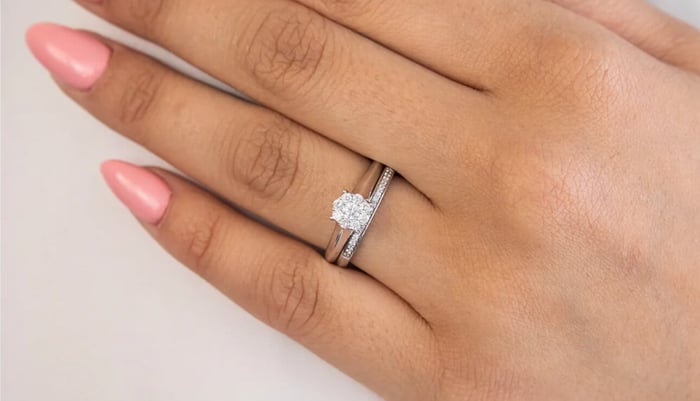
Though times changed, the technique endured. As swords faded from daily use, the art of Mokume Gane found new life. Modern metalsmiths, often trained in both Eastern and Western methods, began reviving the process in fine jewelry and artisan objects. What once decorated katana now appears in engagement rings, wedding bands, and wearable heirlooms that echo the same balance of detail, strength, and character. This shift from battlefield to personal adornment didn’t dilute its meaning. If anything, it made the story even more intimate. Wearing a Mokume Gane ring today means carrying centuries of craftsmanship, not just in look, but in legacy.
What makes this tradition especially meaningful is the commitment required to create it. It’s not something that can be mass-produced or easily replicated. Each piece demands patience, precision, and a deep understanding of the materials at play. Gold, silver, palladium, and other precious metals are bonded without solder, shaped into billets, and carved, twisted, or forged into patterns that will never be exactly repeated. It’s a slow process with unpredictable outcomes, qualities that might sound frustrating in other contexts, but here they add value. The imperfections are part of the beauty. The unpredictability, part of the charm.
Mokume Gane history offers more than a lesson in technique. It invites a closer look at how intention and identity can be fused into something as permanent as metal. From armor to artistry, from the hands of warriors to the hearts of couples today, its journey speaks to resilience, transformation, and the quiet power of meaningful design. For those drawn to tradition, touched by symbolism, or simply captivated by the beauty of contrast, Mokume Gane remains a living art form that connects the past with the present, layer by layer.
…